
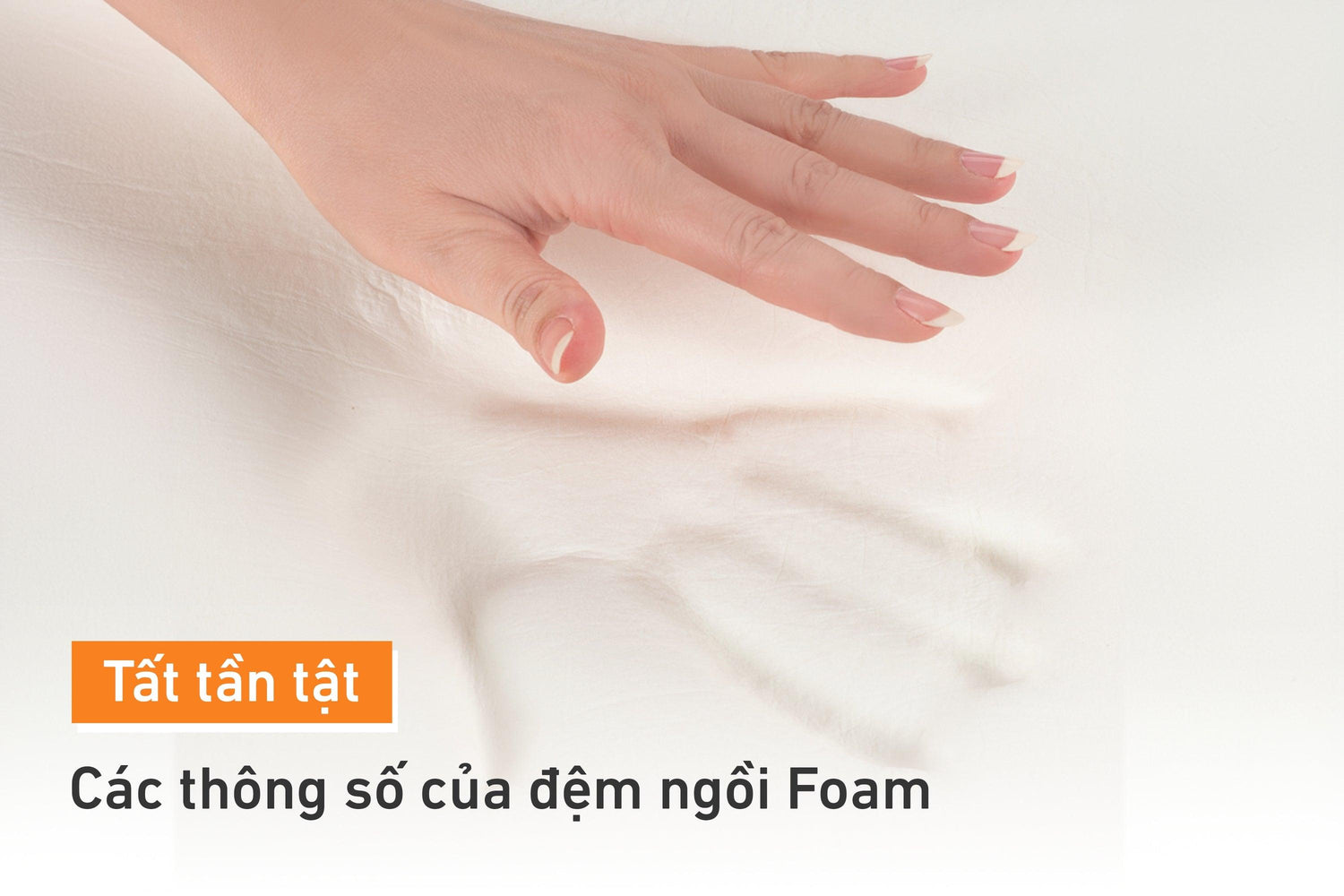
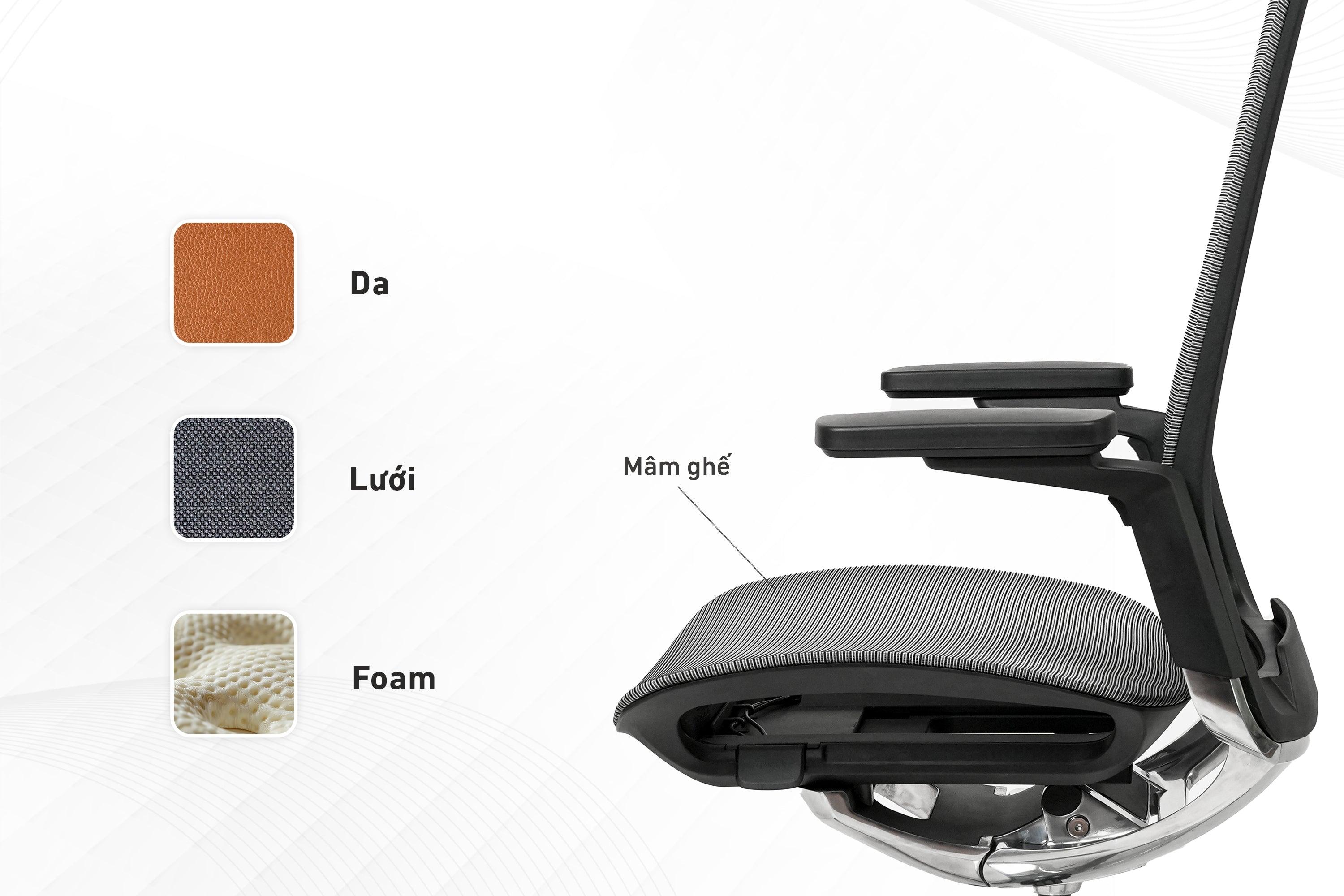
Foam seat cushions offer a soft, gentle sitting experience, providing excellent support for long periods. However, many foam cushions on inexpensive ergonomic chairs are considered substandard because they fail to meet minimum technical specifications.
So, what factors determine the quality of a foam seat cushion? And how can users check to choose chairs with proper foam cushions that support posture and provide comfort and softness?
Foam Density
This is the weight of the foam per unit of volume. The unit for foam density is kg/m3. This specification determines:
- Whether the cushion is elastic enough: high-density foam results in denser internal cells and a stronger structure, sufficient to provide elastic force that helps the foam quickly and completely return to its original shape.

- Durability: dense foam with a robust support core is less prone to damage, allowing the product to be used for many years without sagging or deforming.
- Pressure relief capability: high foam density creates elasticity, thereby supporting the body when sitting, reducing aches and pains, and improving blood circulation.
For seat cushions, the minimum foam density is 30 kg/m3. Seat cushions should have a foam density between 40-60 kg/m3 to ensure comfort when sitting.
Firmness
Firmness, also known as IFD (Indentation Force Deflection), indicates how soft or hard the foam is, reflecting the force required to compress the foam a certain amount. In short, the higher the IFD, the firmer the cushion.
For seat cushions, foam firmness should range from 20-40 ILD. An ILD that is too high will make the user uncomfortable, feeling stiff and sore. Meanwhile, an ILD that is too low can result in a soft cushion that doesn't provide adequate support.

Resilience
Checking the resilience of a foam cushion is an important step to ensure it retains its shape and does not sag or deform excessively after prolonged use.
Standard tests will reflect the cushion's recovery rate, recovery after compression, and ability to withstand repeated compression. Foam cushions with a recovery rate of 95% or more after compression are considered quality foam cushions, providing long-term support for users during sitting.
Breathability
Breathability refers to the ability of air to circulate through the foam layer, which positively or negatively impacts the feeling of comfortable and dry sitting. To prove that the foam cushion meets breathability requirements, the product must pass tests according to relevant national or international standards, including:
- Air permeability: ISO 9237 standard; ASTM D737 standard
- Moisture vapor permeability: ISO 11092 standard; ASTM E96 standard
- Temperature: ISO 8301 standard
The above standard tests help ensure the foam cushion has good breathability, effective moisture management, and reasonable thermal conductivity.
Foam cushions need to be designed with appropriate perforations or integrated with ventilation technology to provide a breathable sitting experience, avoiding stuffiness and heat.

Fire Resistance
Typically, fire resistance is rigorously tested and verified by the manufacturer through specific standards. The fire resistance of foam cushions considers the extent to which the foam can withstand fire and its self-extinguishing capability.
Some standards for this test include ASTM E1590, ASTM E84, ISO 11925-2, and ISO 9239-1.
Completing these tests verifies the foam cushion's capabilities, including: self-extinguishing ability, burn rate, smoke emission, and flame spread.

When choosing ergonomic chairs with foam cushions, users should consider the specifications based on the manufacturer's data sheet (it's advisable to choose reputable brands that publish these specifications) to ensure the product quality matches the price paid.
Additionally, users can perform some personal checks, such as:
- Test sitting: directly feel the support, temperature of the cushion when sitting, and its softness (this also depends on body weight and your expected comfort level to find a chair with a suitable foam cushion).
- Thoroughly check elasticity: press firmly with your hand, sit on various parts of the seat cushion, and perform a quick test (if the cushion doesn't sink too deeply or returns to its original position in under 10 seconds, its elasticity is relatively good).




Leave a comment
This site is protected by hCaptcha and the hCaptcha Privacy Policy and Terms of Service apply.